
Canteens, restaurants & hospitals
Peelings and preparation trimmings; meal leftovers; bread, rice, pasta and other food residues.
In hospitals: only food flows separated from healthcare waste.
Applications
Islands, remote communities, industrial sites or cities: every project starts with knowledge of the ground.
Examples to recognise yourself in
A single territory brings together very different materials. Here are the flows MAWANA proposes to study with their producers.
Peelings and preparation trimmings; meal leftovers; bread, rice, pasta and other food residues.
In hospitals: only food flows separated from healthcare waste.
Production rejects, fruit pulp, vegetable processing residues, brewers' grains or dairy by-products.
Composition, packaging and cleaning products are checked before any integration.
Blood, fats, digestive contents and other organic residues from slaughter or cutting, depending on the nature of the materials.
Animal by-products require a specific sanitary study. Only authorised flows and suitable treatments can be accepted.
Butcher's: trimmings and offcuts; cheese counter: cheese offcuts and unsold items; fruit and vegetables: rejected produce and preparation residues; fish counter: trimmings and cutting residues.
Sorting and depackaging are studied for each department. Animal materials undergo a sanitary check and a dedicated route.
Manure and slurry from cattle and pig farms; poultry waste, notably poultry droppings and bedding, depending on the flow's characteristics.
Dry matter content, bedding and regularity of supply guide the configuration.
Rejected fruit and vegetables, crop residues and non-woody plant matter.
Very fibrous or woody materials require a specific route or preparation.
Unsold fruit and vegetables that have become waste; market residues; grass clippings and some maintenance greenery.
Branches, trunks and wood require separate recovery, to be studied through optional add-on modules. Sorting remains decisive.
Peelings, meal leftovers, coffee grounds and other food waste sorted at source.
Collection must separate these materials from plastics, glass, metals and other waste.
Examples of materials to study, not an automatic acceptance list. Each project checks composition, volumes, foreign matter and treatment conditions. Preventing food waste and using food while it is still edible remain the priority.
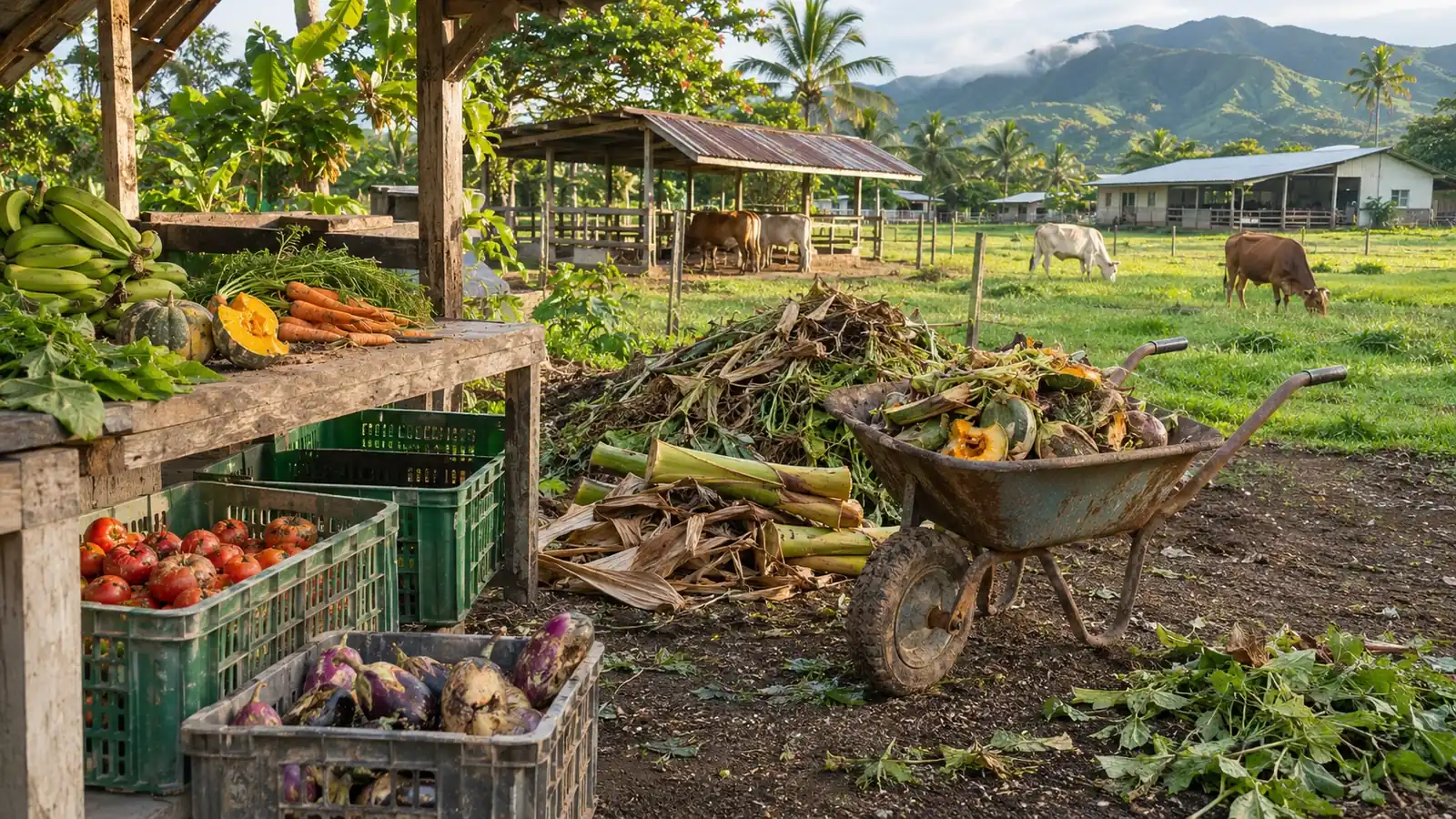
Starting from local resources
A market gardener, a canteen or a market have neither the same materials nor the same rhythms. The study looks for relevant combinations and a realistic local organisation.
Describe your materials ↗Study local treatment that takes into account remoteness, logistical constraints and energy needs.
Understand available feedstocks, heat uses and on-site operating resources.
Integrate a site's organic flows and needs into a dedicated feasibility study.
Assess hybrid solutions for larger feedstocks, according to local constraints.