
Materials to recover
Meal leftovers, food residues or farm effluents: each material is analysed to check that it suits the process.
The New Caledonian startup turning organic waste into value
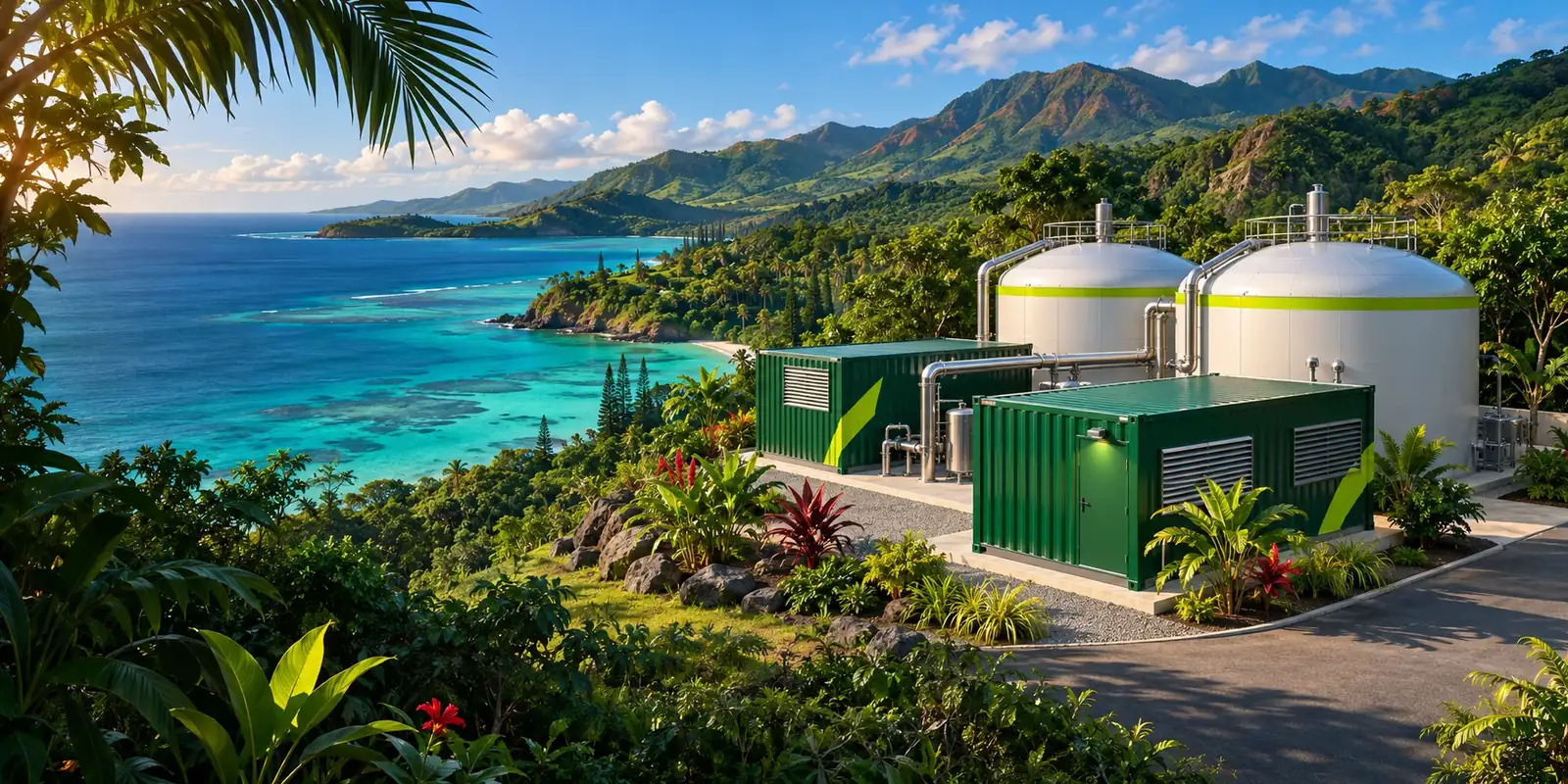
MAWANA Energy develops modular solutions that turn organic waste into biogas to produce electricity, heat and, depending on the configuration, cooling. Our ambition: to adapt these solutions to the needs of businesses, farms and regions internationally.
Our ambition goes further: we are also developing seaweed farming to help improve water quality and support marine life.
Project under development in New Caledonia.
MAWANA in practice
We develop local facilities for local authorities, businesses and farms. The idea: process organic matter on site, rather than systematically transporting it to a distant facility.
Meal leftovers, food residues or farm effluents: each material is analysed to check that it suits the process.
In a closed tank, micro-organisms break down this matter without oxygen and produce a gas: biogas. This is anaerobic digestion.
Biogas can be used to produce electricity and heat. In trigeneration, part of that heat drives a machine that produces cooling, depending on the site's needs.
The starting point
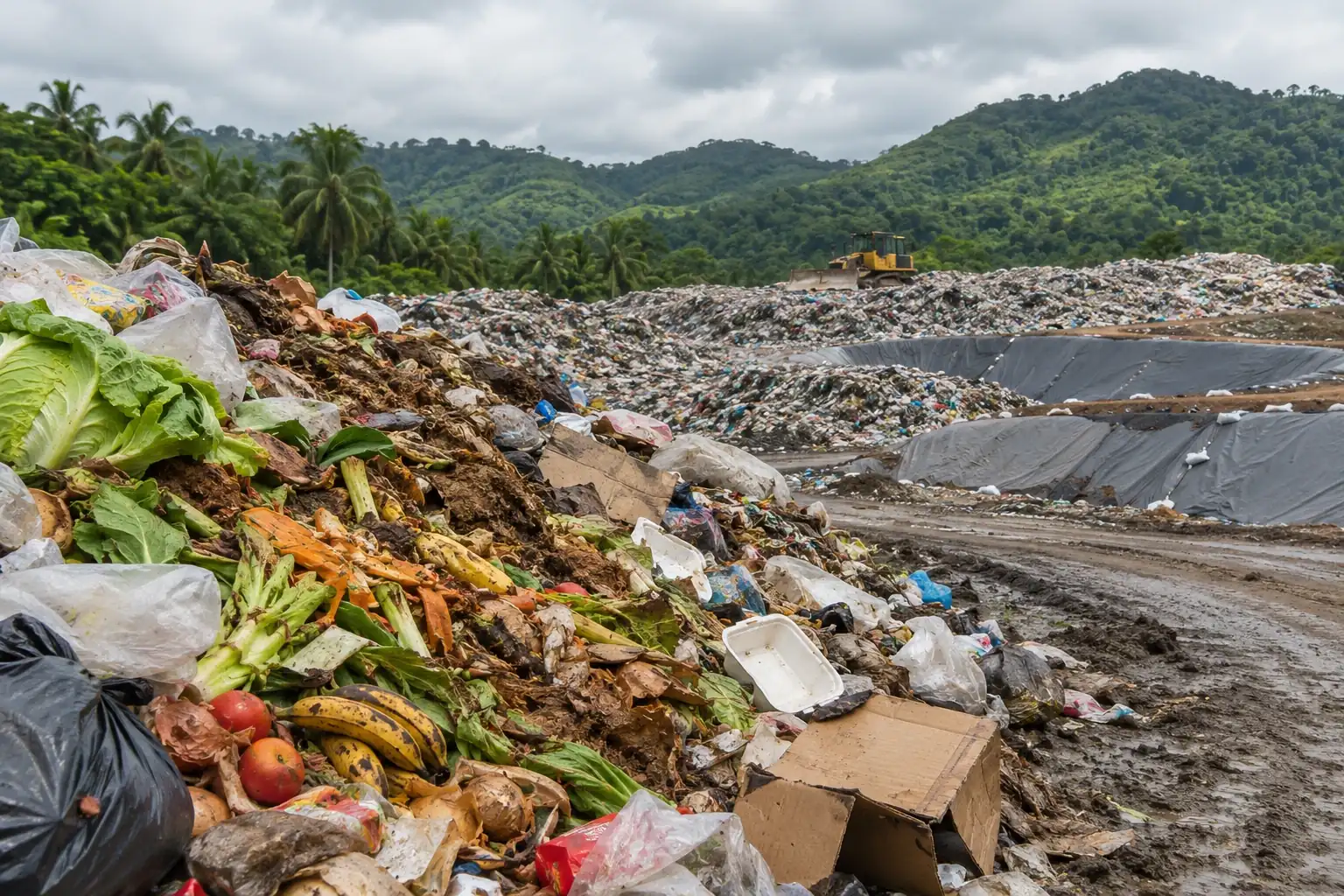
Landfill takes up space. Carrying waste to the treatment centre requires collection resources, fuel and time.
For biowaste, MAWANA is exploring another path: treating it as close as possible to where it is produced and turning it into resources useful to the territory.
Explore another path ↗Our approach
Starting from available resources to design a local solution, sized for the territory's needs.
Consider on-site treatment of organic waste to reduce transport needs.
Use biogas in cogeneration or trigeneration, with cooling production studied according to the site's uses.
Explore the agronomic use of digestate, depending on its quality and the applicable regulations.
Proximity changes the picture
Bringing biowaste treatment closer to where it is produced can reduce trips to a distant site and the associated transport costs.
Gains depend on current distances, volumes, collection organisation and energy needs. They are assessed in the feasibility study.
Assess your site's potential ↗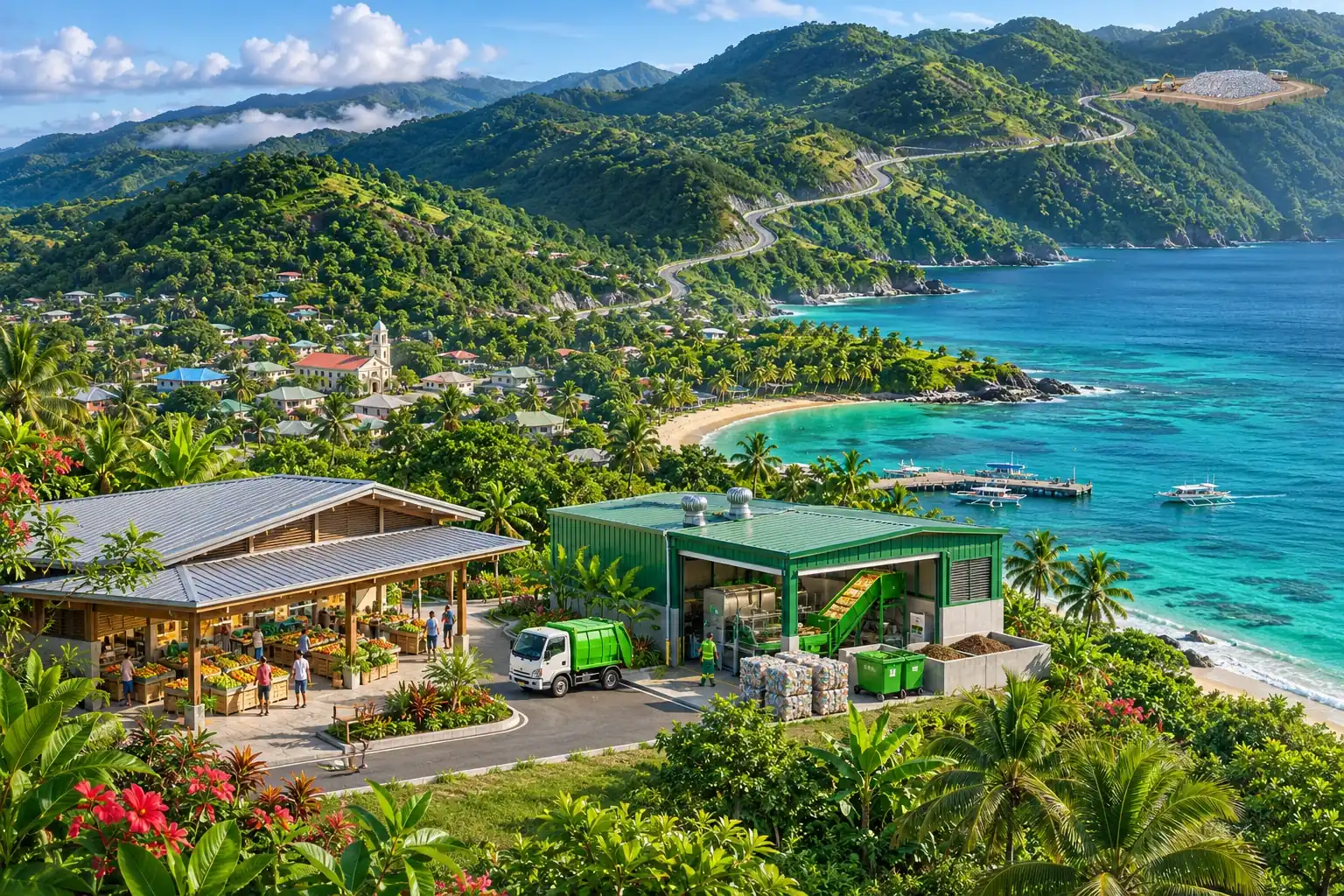
An issue at the root of the project
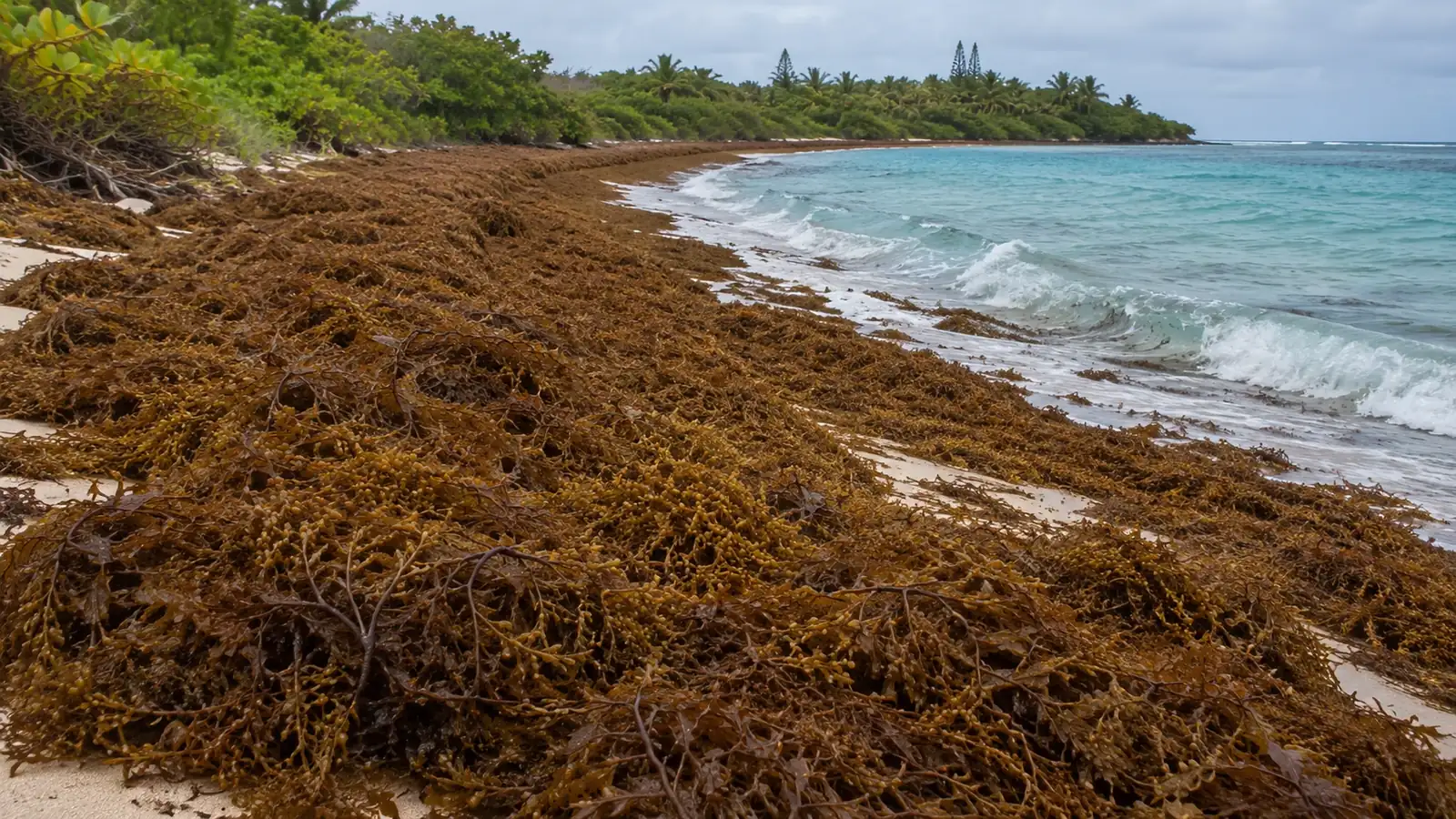
Algal blooms and mass strandings are among the questions that shaped the thinking of MAWANA's founder: how can these accumulations be addressed, and which recovery routes are suitable?
Collection, sorting and characterisation must be studied before any recovery project. Salinity, foreign matter and the possible presence of contaminants must be taken into account.
Stranded seaweed and seaweed from controlled farming are distinct flows, to be assessed separately.
French Antilles · a human and territorial challenge
In Martinique and Guadeloupe, massive strandings go well beyond the landscape: they affect residents, beaches, tourism and port access.
As they decompose on land, sargassum can release hydrogen sulphide (H₂S), which smells of rotten eggs, and ammonia. These emissions cause nuisance and may present health risks depending on exposure.
Accumulations and their odours can make beaches less welcoming, disrupt stays and weigh on accommodation, restaurants and coastal businesses.
On La Désirade, in Guadeloupe, strandings severely disrupted port activities. In June 2025 the Department documented the work carried out to restore access to the port.
See on the ground the consequences for residents and coastal activities.
Watch the report ↗For MAWANA, this situation reinforces the value of characterising these materials and studying suitable recovery routes. It does not mean that MAWANA has already deployed a sargassum treatment solution in the Antilles.
A phenomenon seen from space
From the coasts of West Africa to the Caribbean and the Gulf of Mexico, the great Atlantic belt gathers floating mats of sargassum.
These figures describe the episode studied in 2018. The belt is made up of scattered mats: it is not a solid 8,850 km carpet. Its width varies; this length does not describe an area.
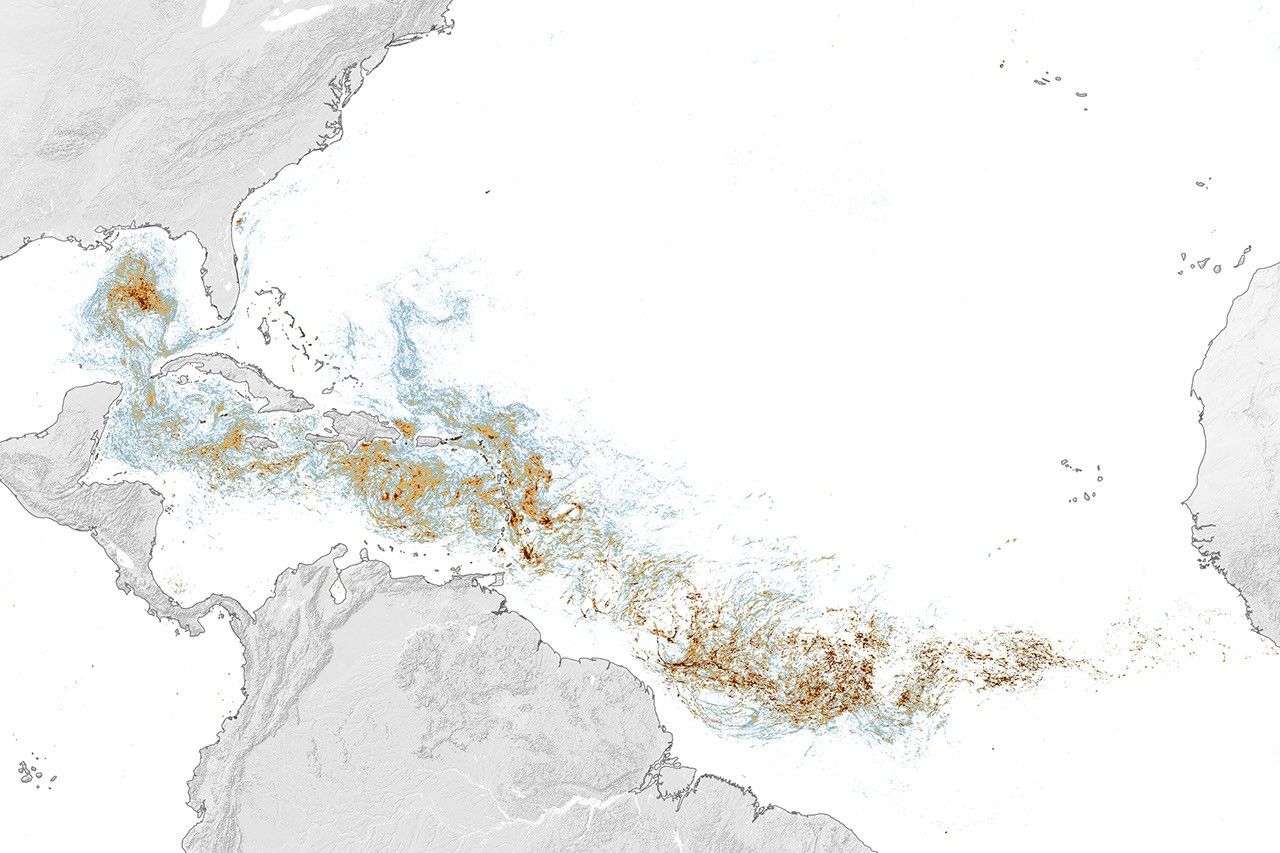
NOAA presents the spread of sargassum in the Atlantic and the effects of strandings on Caribbean communities.
Watch the video on the NOAA website ↗Scientific document used for information purposes. NASA and the organisations cited are not presented as MAWANA partners and do not endorse its solutions. This Atlantic phenomenon illustrates an international issue; it is not a measurement of the New Caledonian coastline.
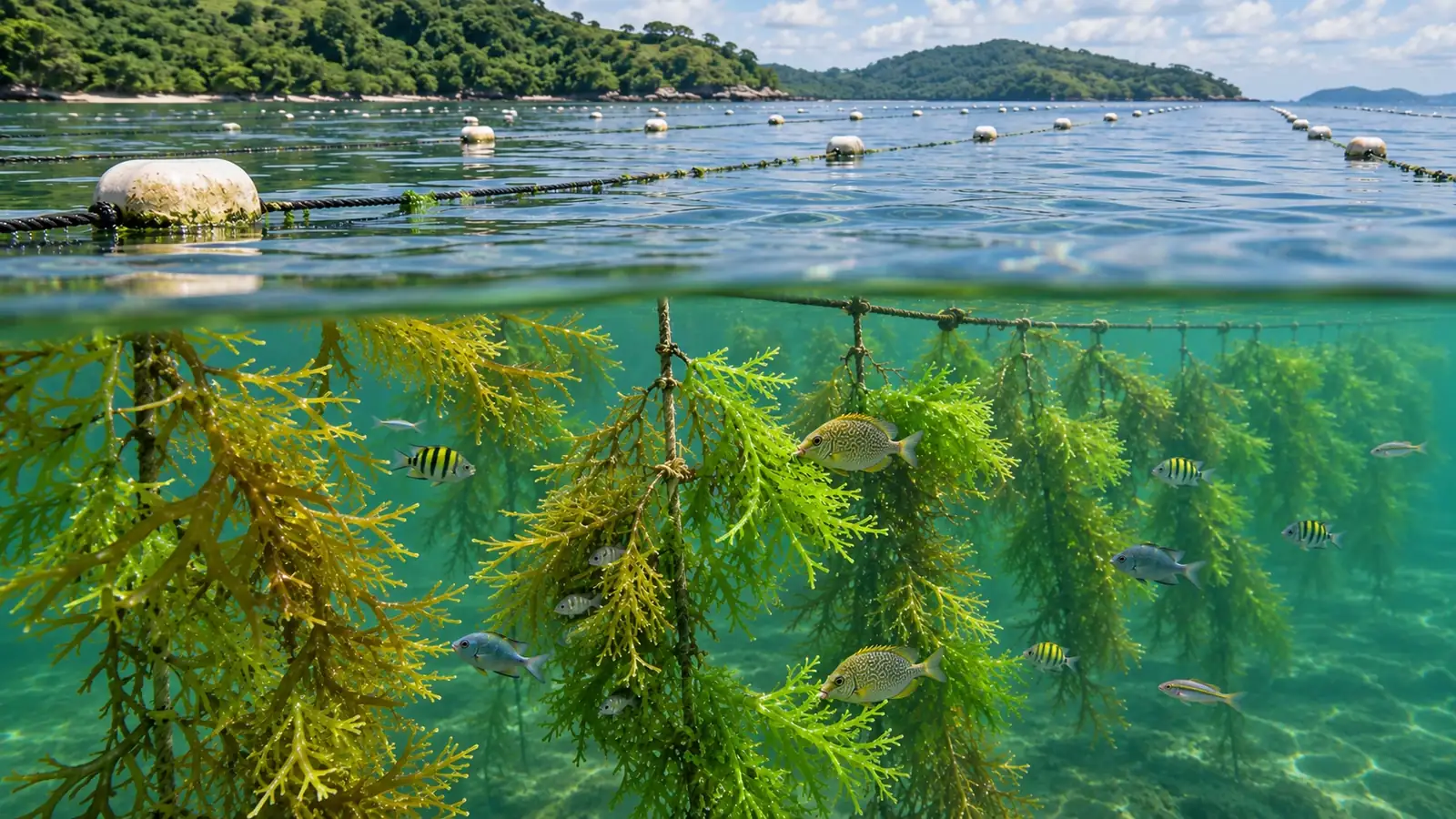
Seaweed at the heart of the cycle · long-line farming
MAWANA's ambition links biowaste recovery with seaweed farming: producing local resources while helping to improve water quality and the vitality of coastal ecosystems.
Effects depend on species, site, light and farming practices. CO₂ uptake during growth does not mean permanent carbon storage. Capturing other pollutants requires proper assessment and harvest management.
Linking energy and seaweed farming ↗Let's start by understanding your feedstock and your needs.